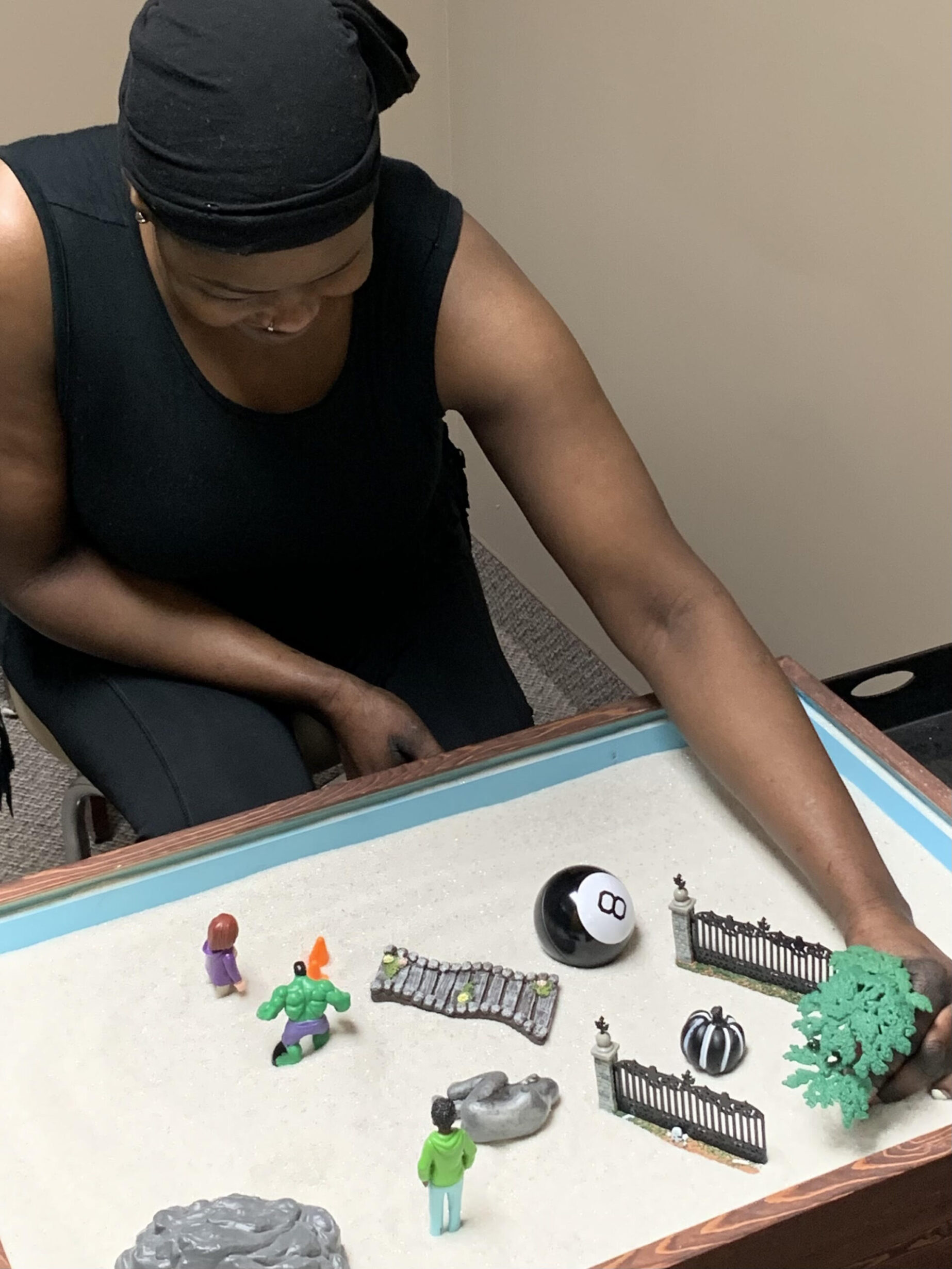
Advanced Trauma in the Sandtray

This advanced clinical training equips clinicians with trauma informed competencies for integrating Sandtray Therapy into assessment, stabilization, and trauma processing. Participants learn to identify trauma presentations across the lifespan, apply DSM5 criteria, understand neurobiological impacts, and use Sandtray interventions to support regulation, narrative processing, and integration. Through case studies and experiential practice, clinicians develop skills in managing dissociation, monitoring SUDS, applying the TriPhasic Model, and addressing secondary traumatic stress and burnout.

*A minimum of 21 hours of prior sandtray therapy training is recommended.

IN PERSON TRAINING:
Calgary, Alberta 2026

Interactive Synchronous Virtual:
2026

Advanced Trauma


Course Level
Advanced

Target Audience
Social Workers, Psychologists, Nurses, Mental Health Counsellors


2 Day In-Person OR Interactive Synchronous Distance Learning (Virtual)

Cost: $699

Learning Objectives

  • Define trauma and differentiate acute, complex, interpersonal, and systemic trauma using DSM‑5 criteria and lifespan indicators.
  • Identify signs of abuse, neglect, dissociation, and trauma loops, and evaluate how colonization, discrimination, and social determinants shape trauma experiences.
  • Explain the neurobiological effects of trauma and describe how Sandtray Therapy supports implicit memory processing, regulation, and narrative integration.
  • Apply cultural humility and ethical decision‑making when assessing trauma, determining readiness, and implementing Sandtray interventions.
  • Conduct trauma assessments using Sandtray by observing non-verbal cues, monitoring SUDS, and recognizing dissociation and flooding.
  • Develop trauma‑informed intervention plans by determining when to use containment, stabilization, or defer trauma processing for safety.
  • Implement Sandtray interventions across the Tri‑Phasic Model to facilitate stabilization, trauma processing, and integration.
  • Analyze case studies to select appropriate Sandtray interventions and integrate trauma‑informed principles into treatment planning.
  • Identify and apply strategies to mitigate secondary traumatic stress, compassion fatigue, and burnout using Sandtray techniques for clinician self-care.

Agenda Day 1

  • 8:45–9:00 Technical/ Check In

  • 9:00–10:00 Understanding Trauma: Definitions, Types, and DSM‑5 Criteria.

  • 10:00–10:15 Coffee Break

  • 10:15–11:15 Signs of Abuse, Neglect, Dissociation, and Trauma Loops.

  • 11:15–12:00 Neurobiology of Trauma & Sandtray Mechanisms.

  • 12:00–12:30 Lunch

  • 12:30–1:30 Trauma Assessment Using Sandtray.

  • 1:30–2:30 Role Play #1 Practice.

  • 2:30–2:45 Coffee Break

  • 2:45–4:00 Cultural Humility, Colonization, Discrimination, and Social Determinants of Trauma.

Agenda Day 2

  • 8:45–9:00 Technical/ Check In

  • 9:00–10:00 Tri‑Phasic Trauma Treatment Model in Sandtray

  • 10:00–10:15 Coffee Break

  • 10:15–11:15 Containment, Stabilization, and When Not to Process Trauma

  • 11:15-12:00 Techniques for Regulation and Safe‑Space Directives

  • 12:00–12:30 Lunch

  • 12:30–1:30 Role Play #2 Practice

  • 1:30–2:15 Trauma Processing and Narrative Integration in Sandtray

  • 2:15–2:30 Coffee Break

  • 2:30–3:30 Role Play #3 Practice

  • 3:30–4:00 Clinician Self‑Care, Secondary Trauma, and Burnout Prevention


Certificate Eligibility
1. Must attend both days 2. Camera On for Virtual Delivery 3. Completion of a course evaluation is required
Certificates will be provided via email after completion

Questions, grievances, cancellations, refund and special accomodations can be submitted to Donna Mirus at office@canadiansandtrayinstitute.ca
Training presented by: Canadian Sandtray Institute, Olds, Alberta T4H 1H3 Phone: 587-200-7775