
Applied Sandtray Therapy Program
How does it work and what does this program include?
As part of this sandtray therapy training program, you can expect:
3 days of in-person experiential training
That is 21 hours of sandtray therapy training!
PLUS…
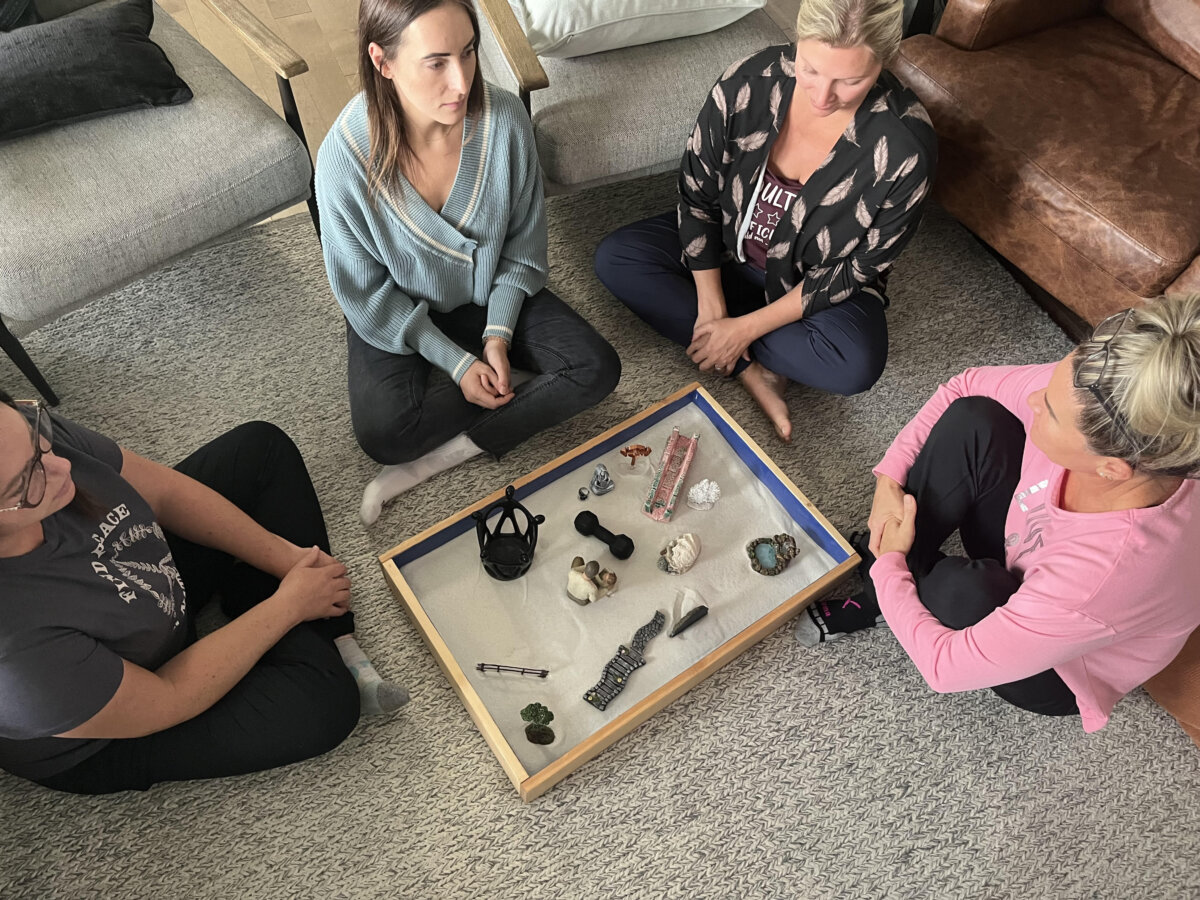
You will get your own portable sandtray, many goodies including miniatures, some fun swag, a fun experience and your own healing through the use of the sandtray!
AND... you’ll come away with the confidence needed to do sandtray therapy with all ages.
Cost:
$1199 Flexible Interest Free Payment Plans Available
Locations/Dates
VICTORIA, BC January 15, 16, 17th, 2027
Venue Location TBA
& MONCTON, NB (COMING SOON April 2027)
Course Level:
Basic/Intermediate
Suitable for:
Social Workers, Psychologists, Nurses, Mental Health Counsellors

Want to become an Applied Sandtray Therapist?
At the Canadian Sandtray Institute we offer the Applied Training in Sandtray Therapy. This program accepts mental health professionals and graduates of a specified mental health program to partake in an in-person experiential learning experience over 3 days.
THE CASE CONSULTATION SUCCESS PLAN
Completed!
(You are here)
Enroll in the training
Become a confident,
connected sandtray therapist
Applied Knowledge in Sandtray Therapy
Join us for a dynamic 3 day training that blends neuroscience, trauma informed practice, and expressive therapy into a deeply experiential learning experience. Whether you work with children, youth, or adults, sandtray therapy offers a gentle yet powerful way to access emotion, integrate memory, and support healing through symbolic expression. In this hands on training you will learn the foundations and history of sandtray therapy. Explore miniature categories, tray setup, and therapeutic rationale. Practice presenting and processing trays using a structured, stage based model. Understand themes, symbolism, and developmental differences. Strengthen your documentation skills using clinically sound, legally defensible language. Discover how brain science, polyvagal theory, and neuroplasticity explain the effectiveness of sandtray therapy. Engage in case studies and experiential practice across the lifespan.
Whether you’re new to sandtray or looking to deepen your skills, this training will expand your clinical toolkit and enhance your therapeutic presence. Leave feeling confident, inspired, and ready to bring sandtray therapy into your work.
Day 1
Day 2
Day 3

For Certificate Eligibility:
1. Must attend all days 2. Completion of a course evaluation is required
Certificates will be provided via email after completion
Questions, grievances, cancellations, refund and special accomodations can be submitted to Donna Mirus at office@canadiansandtrayinstitute.ca
Training presented by: Canadian Sandtray Institute, Olds, Alberta T4H 1H3 Phone: 587-200-7775